CABRIOLE LEGS
Installation
Unglazed ceramics, Bandages
2024
«Las Piernas» son una parte fundamental del cuerpo humano, esenciales en nuestra capacidad para movernos, caminar, correr y brindarnos movilidad, fuerza y equilibrio. Sin embargo, hoy en día, esas funciones básicas se ven profundamente marcadas por una sociedad que, como propone Byung-Chul Han en su concepto de la sociedad del cansancio, no solo enfrenta un agotamiento físico, sino también un desgaste psíquico, resultado de la constante sobrecarga de tareas, expectativas y la exigencia de eficiencia sin descanso.
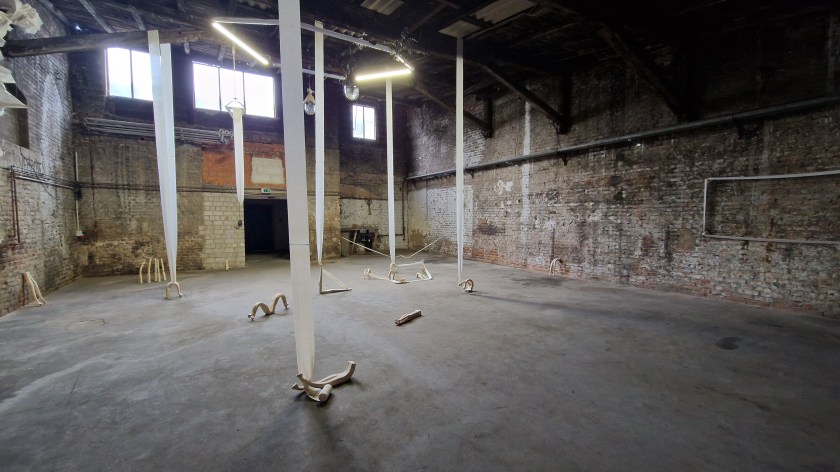
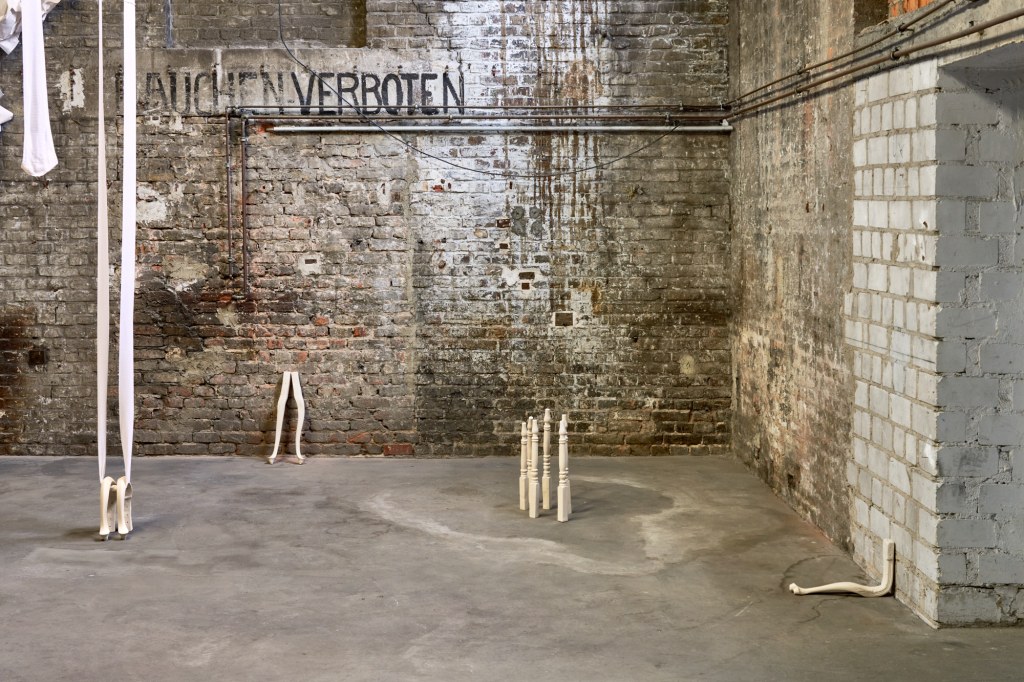
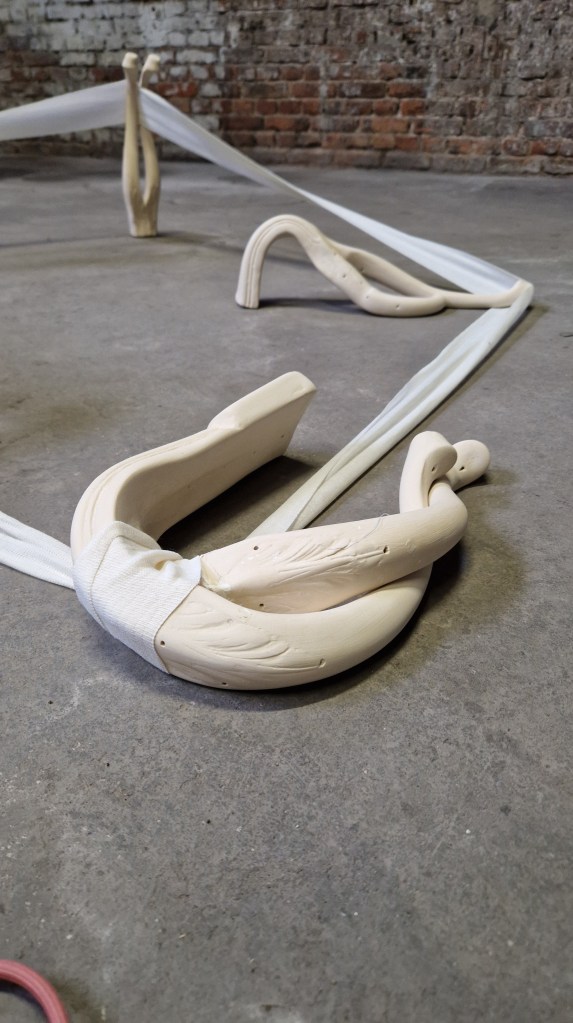
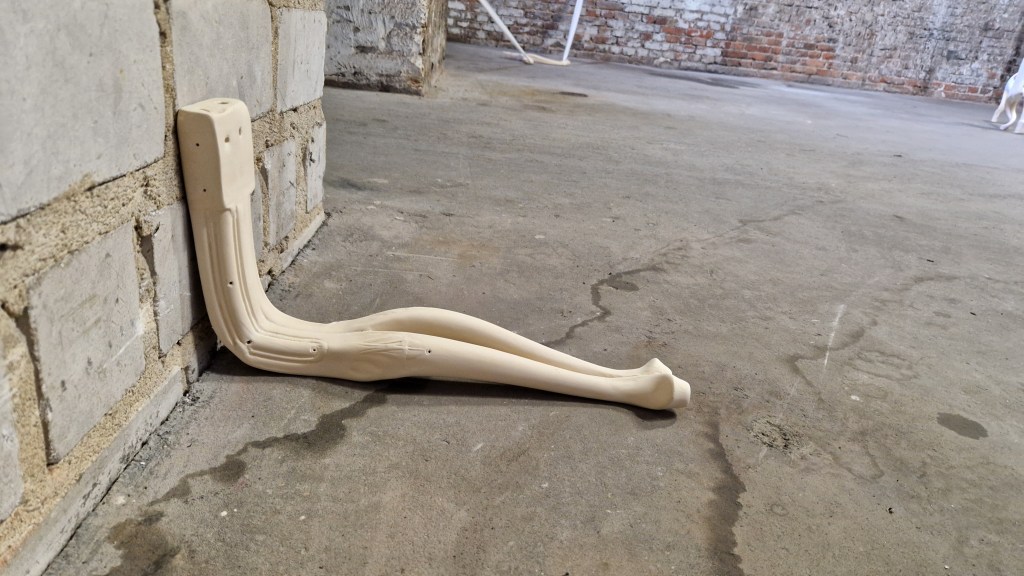
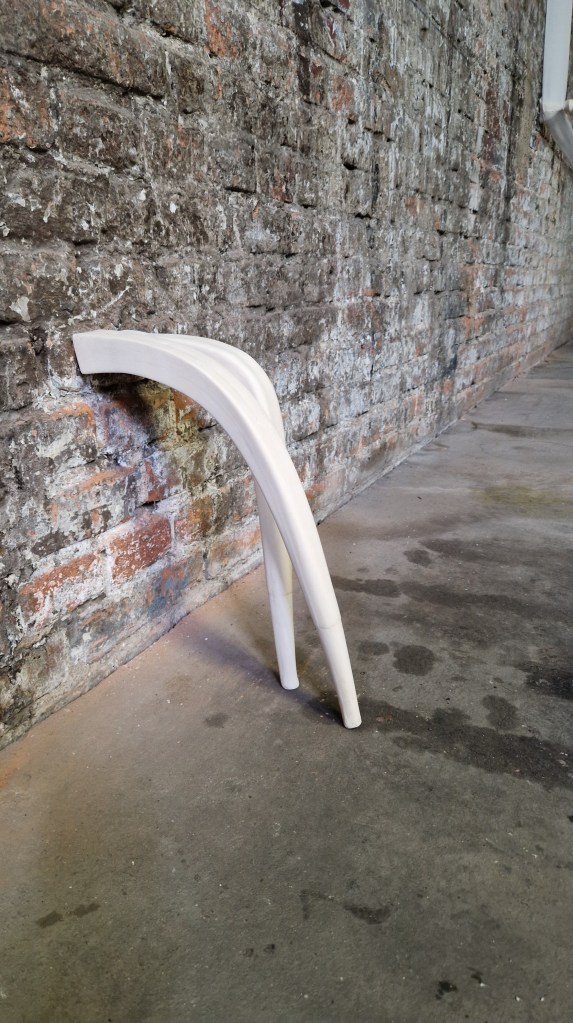
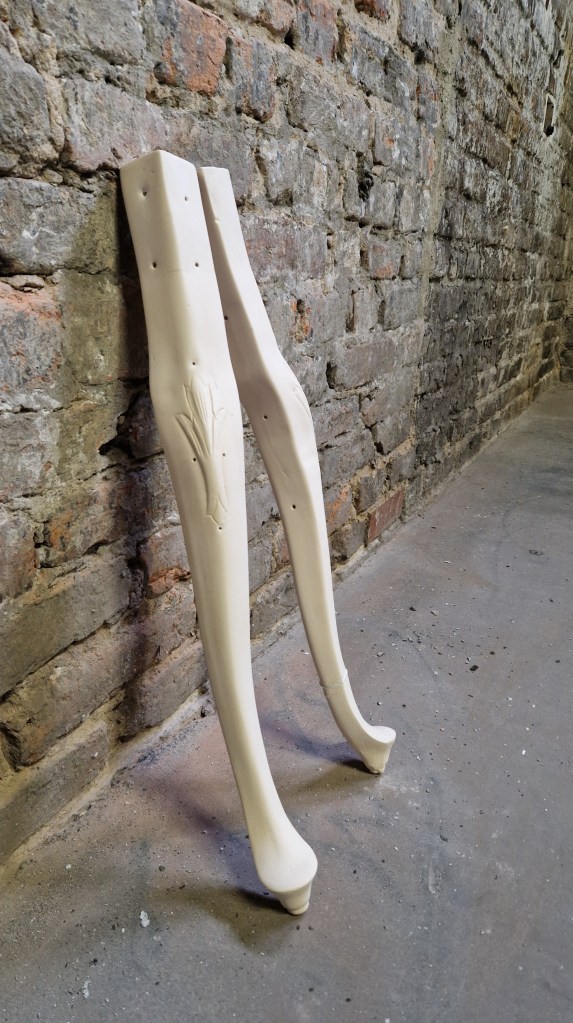
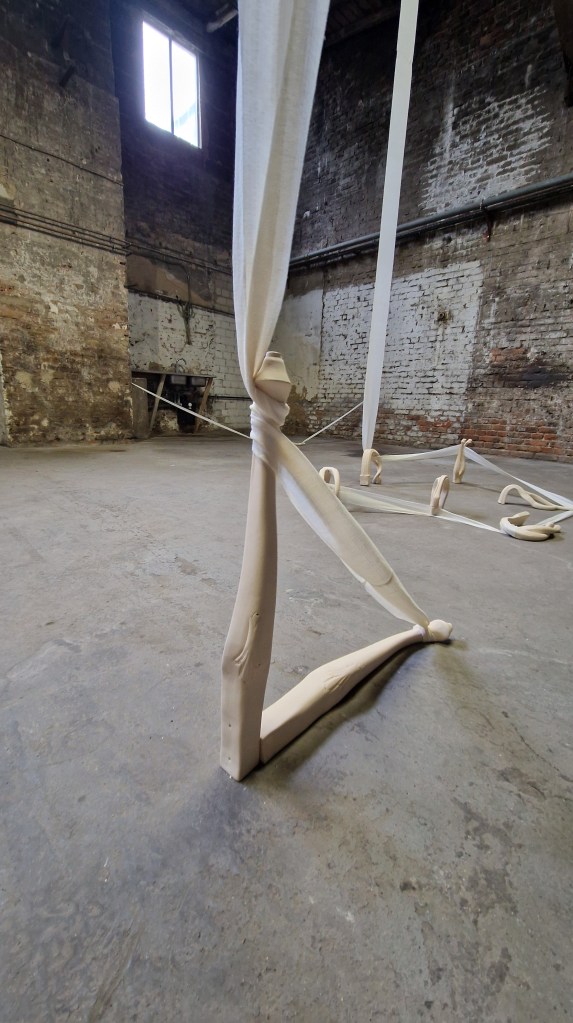
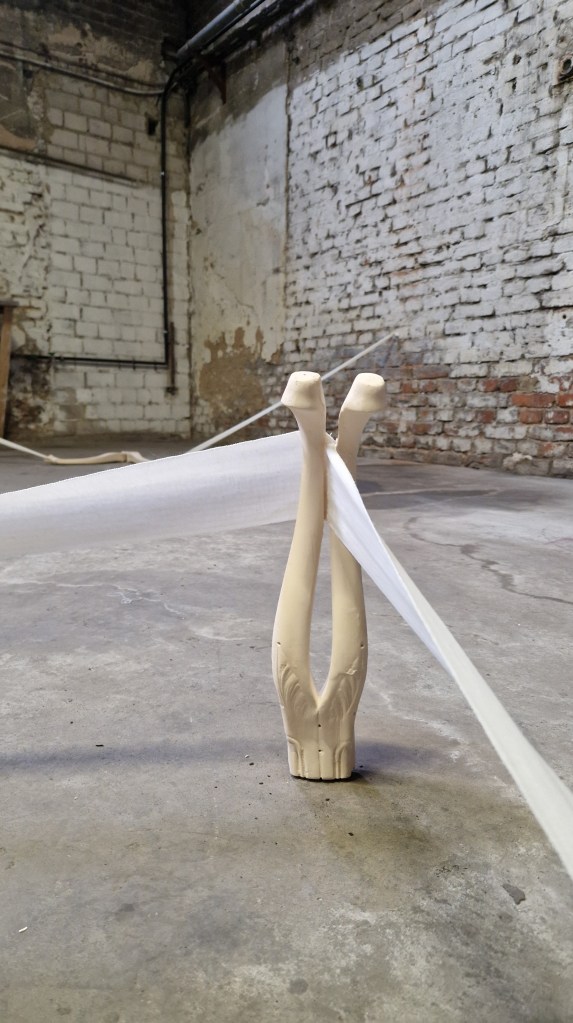
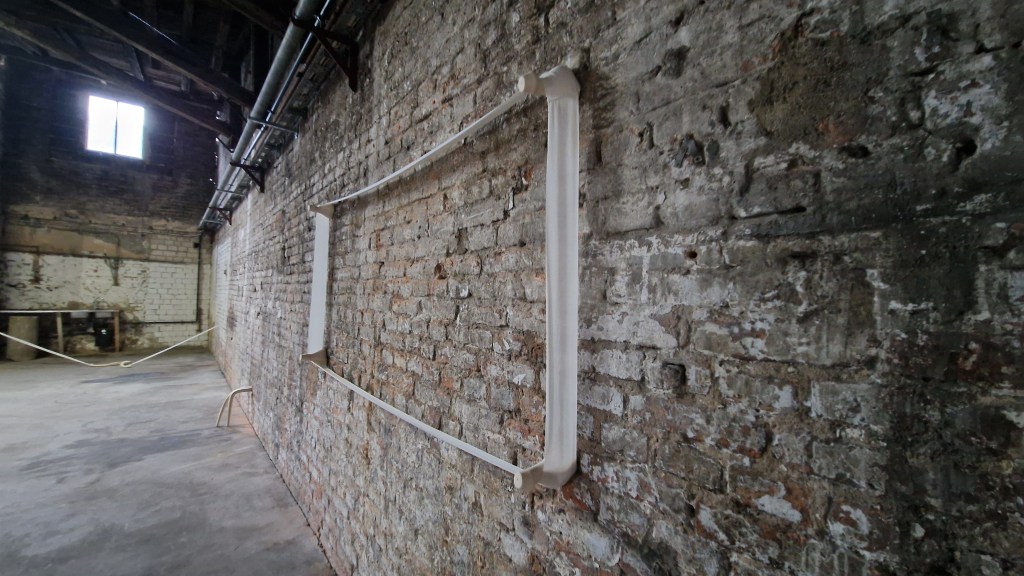
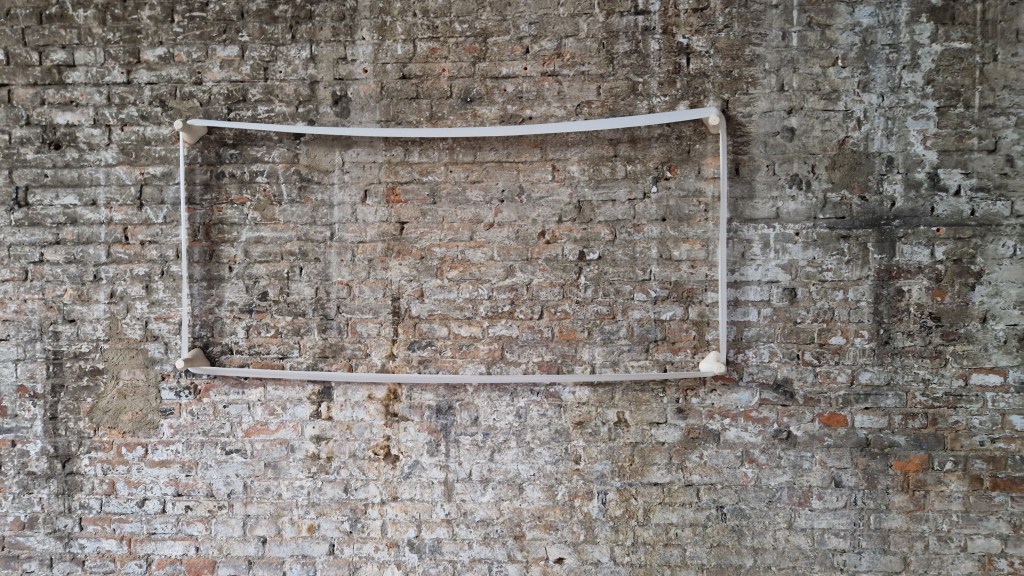
En el proyecto «Piernas», utilizo la metáfora de «la pata de la mesa» de manera literal, pero estas patas no son cualquier objeto funcional. Son patas femeninas, que reflejan la flexibilidad, la capacidad de adaptarse y ceder sin romperse, características que históricamente se han asociado a la mujer, tanto en su cuerpo como en su rol social. Estas patas, provenientes de diferentes épocas, no solo aluden al paso del tiempo, sino también a cómo la resistencia y el sacrificio han sido modelados en el contexto femenino: una flexibilidad que, a menudo, es interpretada como fortaleza, pero que puede resultar en una sobrecarga silenciosa.
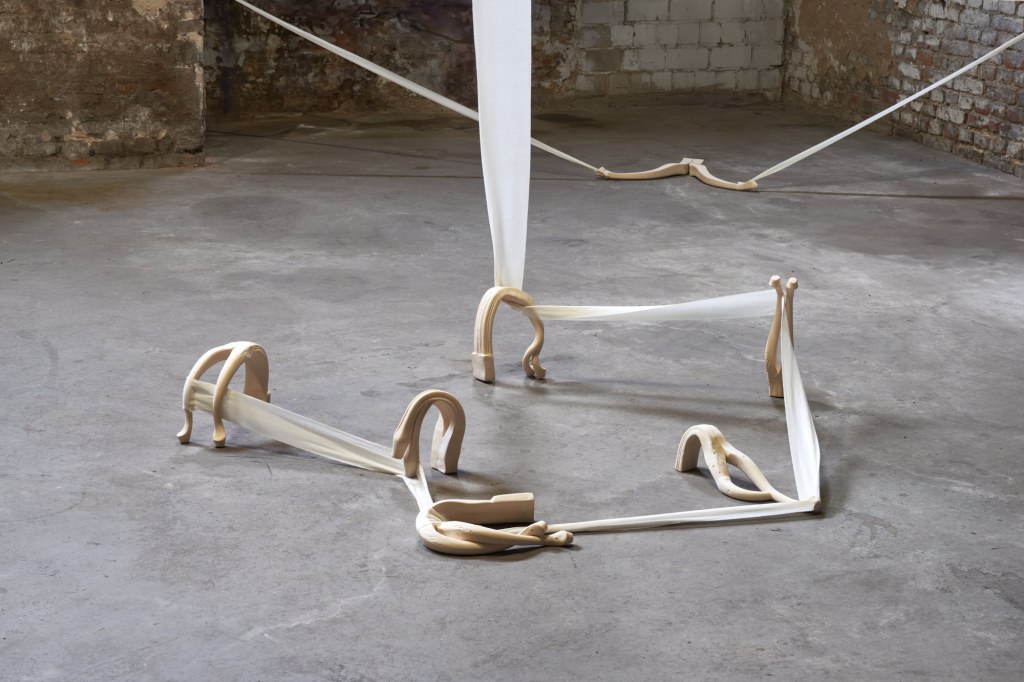
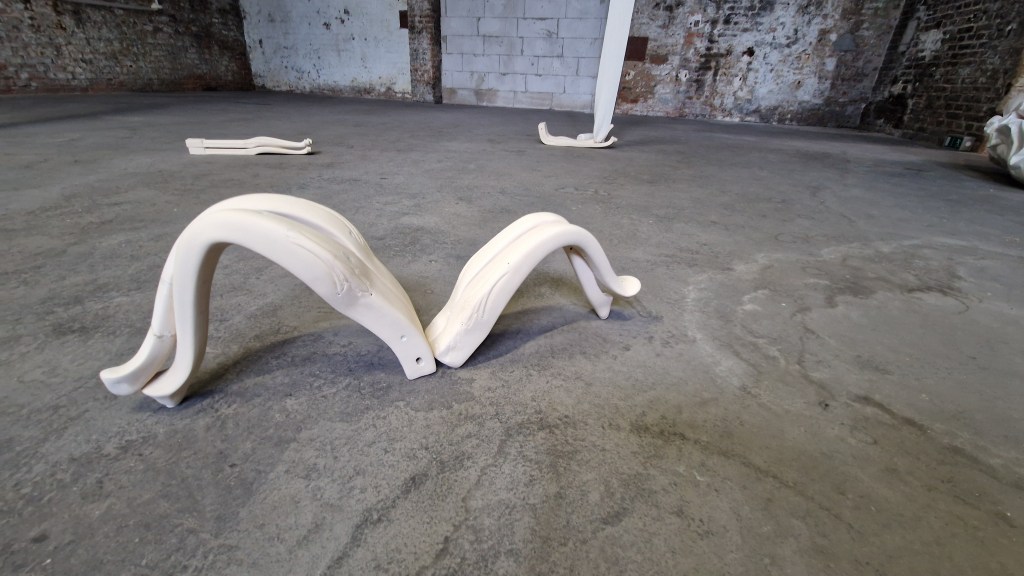
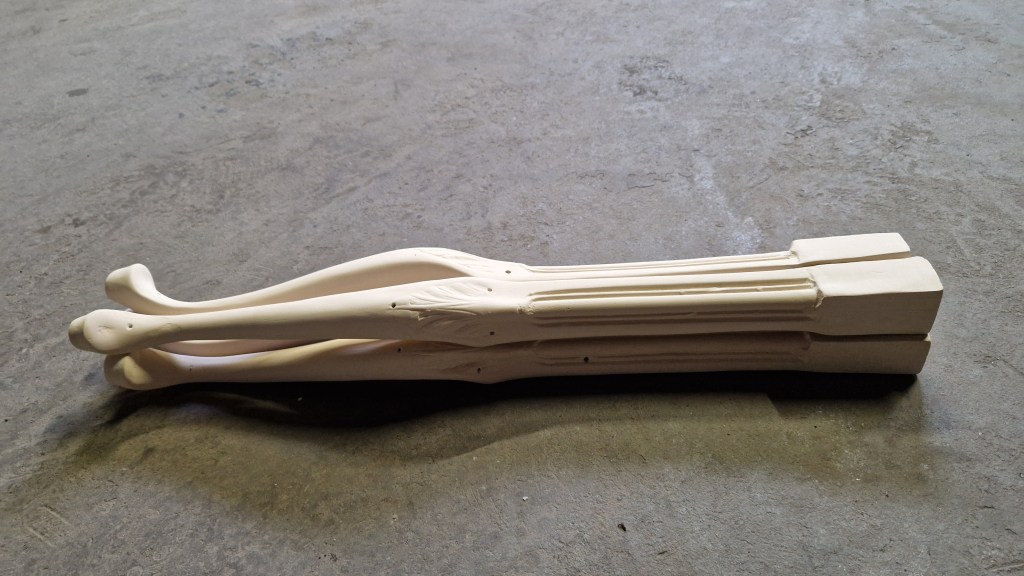
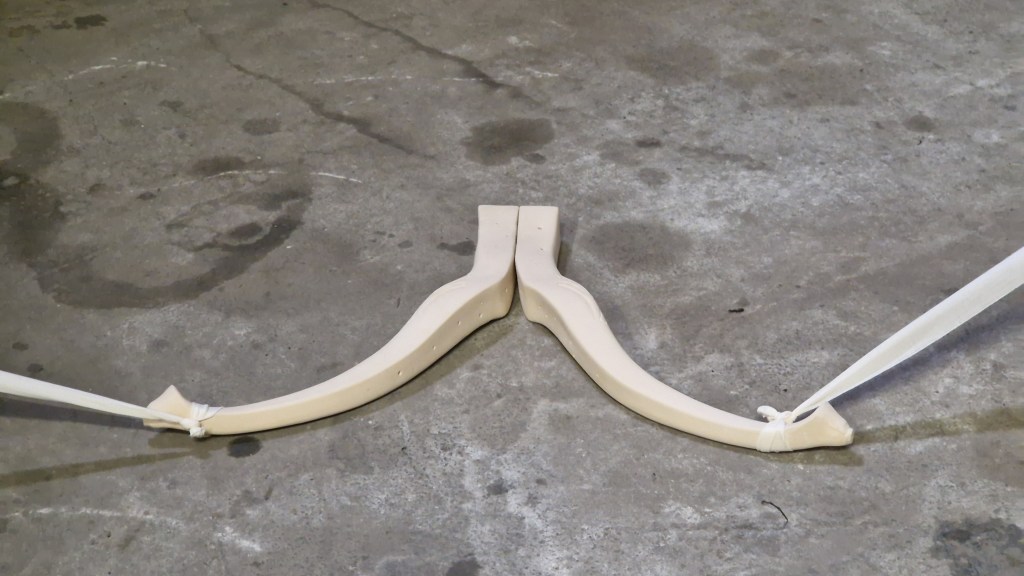
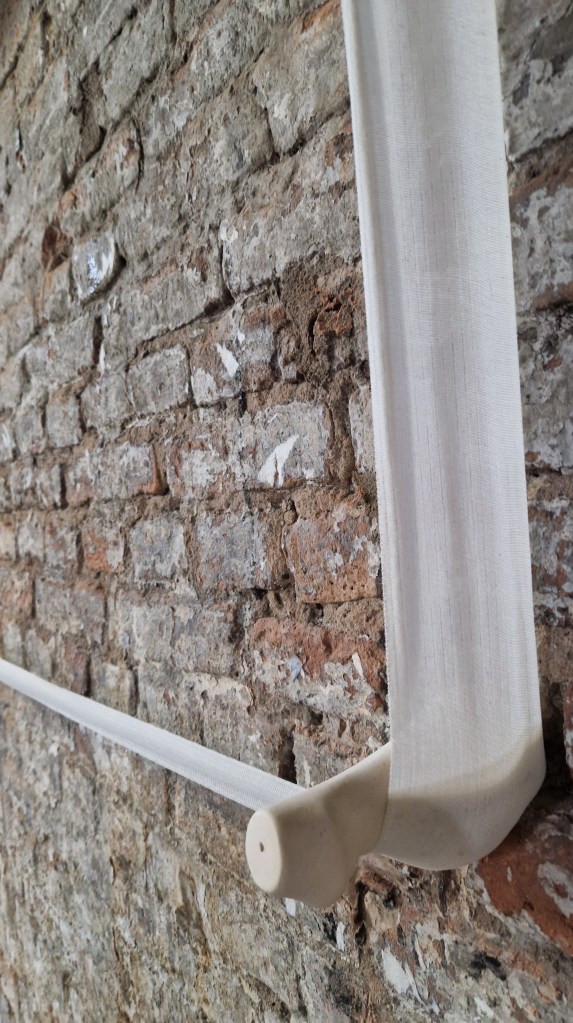
Cada pata de mesa tiene su historia, su propio desgaste, pero todas comparten una característica: la deformación. La flexibilidad, representada en estas formas curvadas, dobladas, es a la vez una muestra de resistencia y vulnerabilidad, de un cuerpo que cede ante las presiones de una sociedad que exige sin pausa, pero que también requiere descanso. Estas patas se transforman en piezas únicas de barro, hechas a mano y sin esmaltar, donde el acabado imperfecto refleja ese mismo abandono de la perfección que define la experiencia humana ante la sobrecarga de demandas. En este contexto, las patas de mesa, tan flexibles, parecen reclamar el derecho a descansar, a no ser constantemente útiles, a no estar siempre en pie, a no ser siempre la base de algo más.
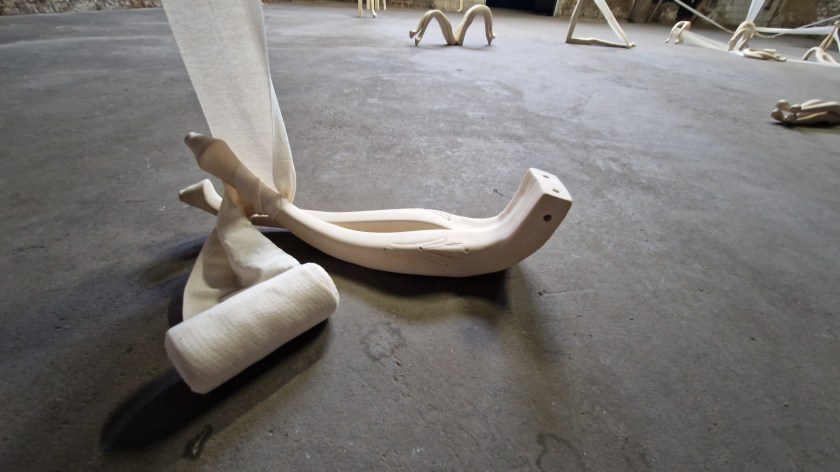
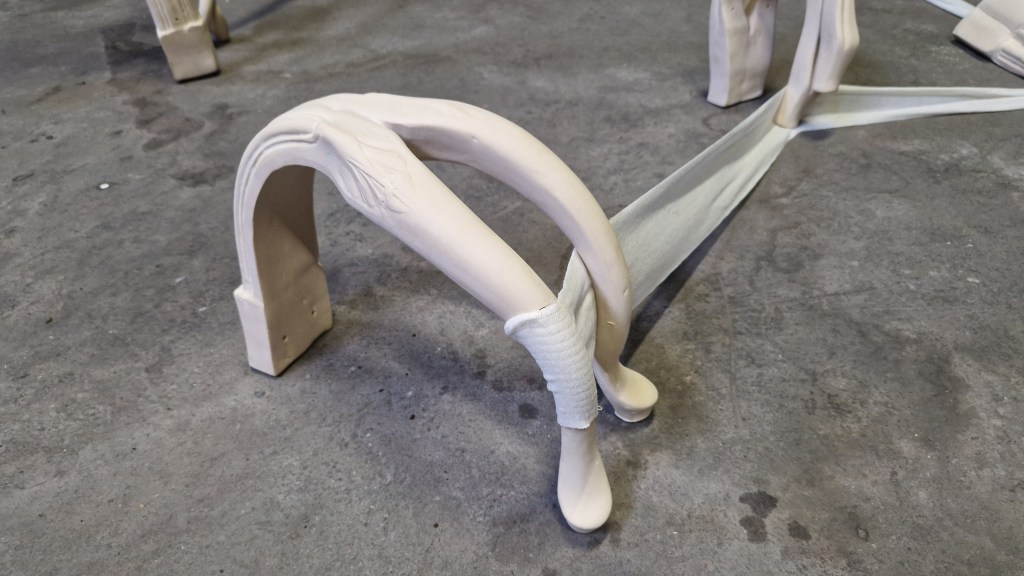
Estas piezas ensambladas, curvadas y dobladas hasta el límite, transmiten la fatiga no solo física, sino también psíquica. Reflejan tanto la pesadez del agotamiento como el alivio del descanso. Pero también nos hablan de un cuerpo que ha sido moldeado por expectativas que ya no pueden ser sostenidas. Al igual que la mujer, cuya flexibilidad ha sido históricamente valorada pero a la vez explotada, estas patas de mesa parecen gritar la necesidad urgente de liberarse de la presión, de romper con el ciclo interminable de actividad y de encontrar espacio para el reposo, para la desconexión.
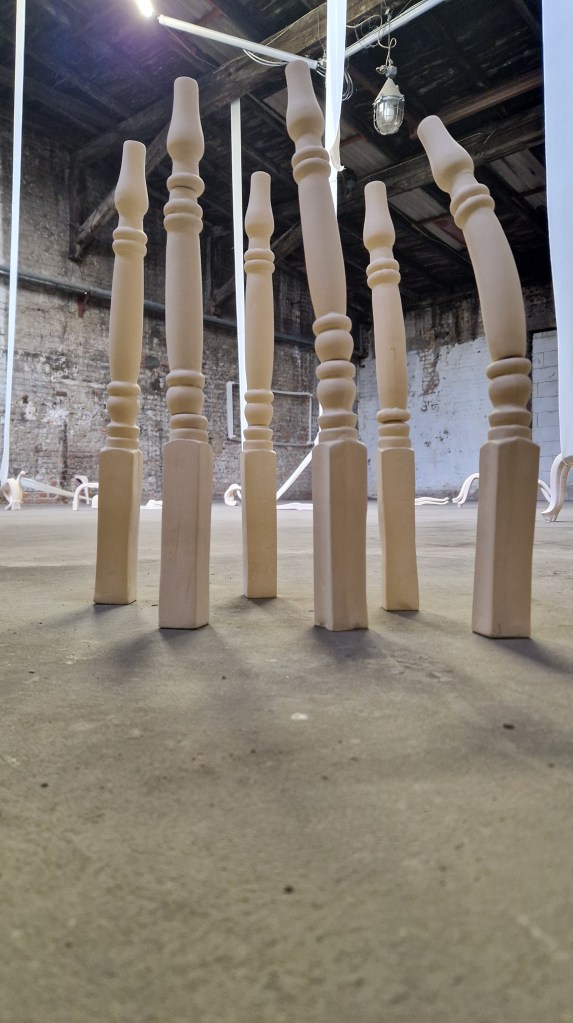
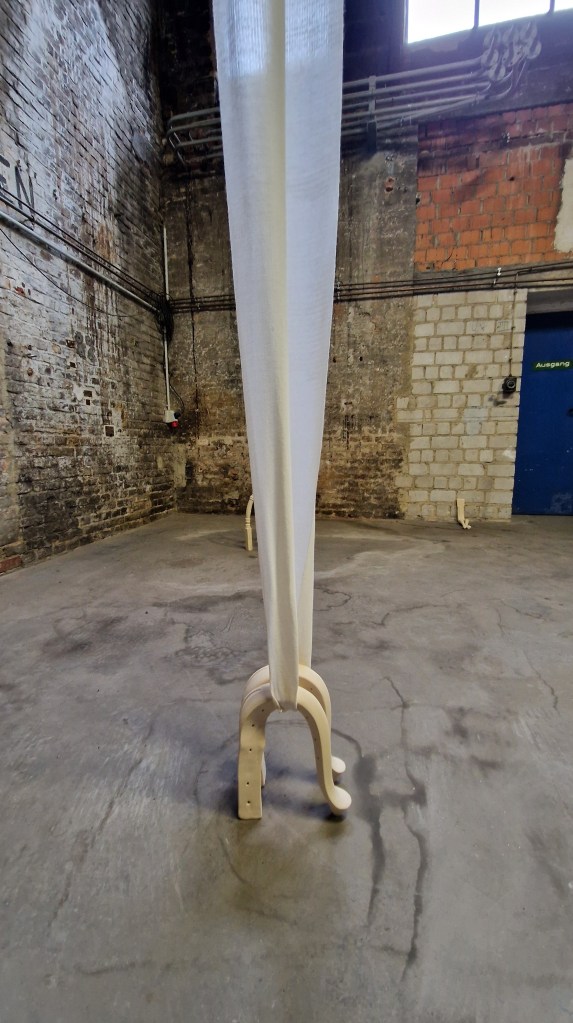
La propuesta culmina en una instalación donde los objetos y las imágenes de mi archivo interactúan, se relacionan y se acompañan, creando escenas llenas de vida que buscan interpretar momentos de la existencia humana. Este diálogo, que transita a través del tiempo, invita a generar conciencia sobre el desgaste no solo físico, sino también mental, y plantea un debate público sobre el verdadero costo de nuestra productividad. Al hacerlo, resalta la tensión entre la flexibilidad que la sociedad exige de la mujer y la necesidad de descansar, de detenerse, de romper con las expectativas que imponen el deber sobre la voluntad.
***
«Legs» are a fundamental part of the human body, essential for our ability to move, walk, run, and provide us with mobility, strength, and balance. However, today these basic functions are profoundly shaped by a society that, as Byung-Chul Han proposes in his concept of the society of fatigue, faces not only physical exhaustion but also mental burnout, a result of the constant overload of tasks, expectations, and the demand for relentless efficiency.
In the project «Legs», I use the metaphor of the «table leg» in a literal sense, but these legs are not just any functional objects. They are feminine legs, embodying flexibility—the capacity to adapt and yield without breaking—qualities that have historically been associated with women, both in their bodies and social roles. These legs, drawn from different eras, not only speak to the passage of time but also to how resistance and sacrifice have been shaped within the feminine context: a flexibility that is often seen as strength but, over time, can lead to silent overload.
Each table leg carries its own story, its own wear and tear, yet all share one common feature: deformation. Flexibility, as seen in these curved and bent forms, is both a sign of resistance and vulnerability—a body that yields under the pressures of a society that demands without pause, but also requires rest. These legs are transformed into unique, hand-crafted, unglazed clay pieces, where the unfinished surfaces reflect the same abandonment of perfection that defines the human experience when faced with overwhelming demands. In this context, the table legs, with their inherent flexibility, seem to demand the right to rest—to not always be useful, to not always bear the weight of something else.
These assembled pieces, bent and curved to the breaking point, convey not only physical fatigue but also mental exhaustion. They reflect both the heaviness of weariness and the relief of rest. But they also speak of a body shaped by expectations that can no longer be upheld. Just as women’s flexibility has historically been valued but also exploited, these table legs seem to cry out for the urgent need to break free from constant pressure—to break the endless cycle of productivity and to make space for rest and disconnection.
The proposal culminates in an installation where the objects and images from my archive interact, relate, and accompany one another, creating scenes full of life that seek to interpret moments of human existence. This dialogue, which transcends time, aims to raise awareness of not just physical exhaustion, but also mental fatigue, and opens a public debate on the true cost of productivity. It highlights the tension between the flexibility society demands of women and the essential need to rest—to pause, to break free from expectations that place duty above will.
***
VERWOBEN / VERBUNDEN / VERWUNDEN
VERÓNICA AGUILERA CARRASCO & KATRIN PAUL
KUNST IN DER MILCHSACKFABRIK
AUSSTELLUNGEN IN DER ALTEN SCHMELZE
***
 Verónica Aguilera